Prehisto Parc
This park recreates life in prehistoric times.

© Domaine de la Rhonie Hotel, Meyrals
Charming hotel farm retreat
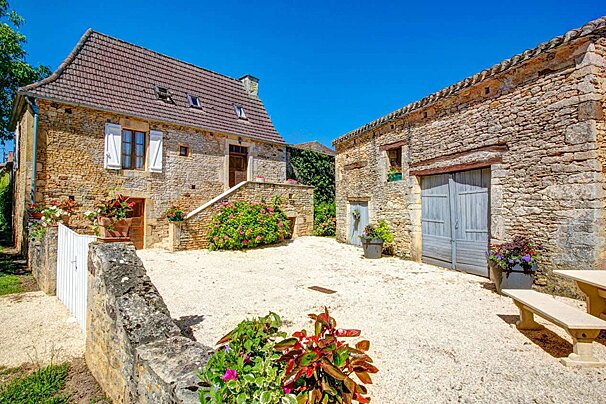
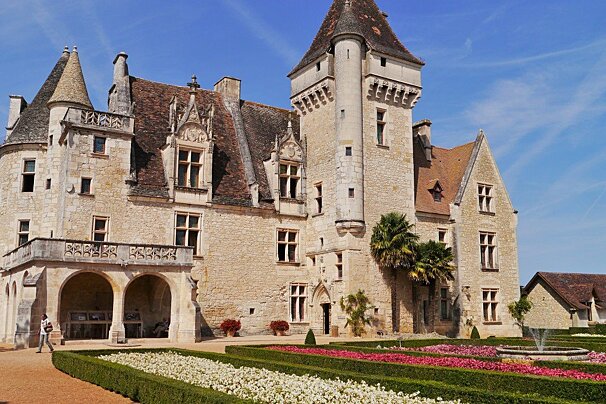
Located on 45 hectares of classified land, the Rhonie Daomine has been operating under the same family name since 1830 and was opened to guests for the first time in 1963.
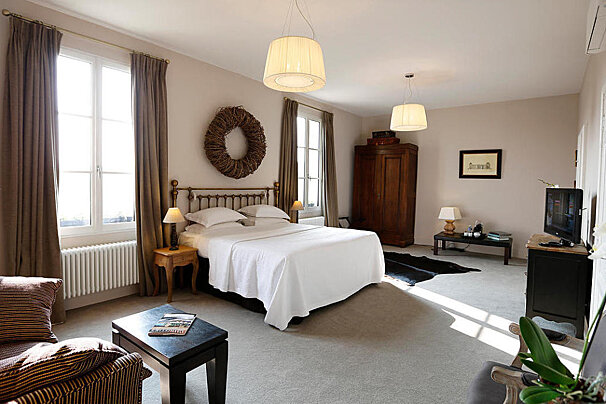
With stone walls and real rustic charm, there are a total of 12 rooms to choose from, each of which has a flat screen TV and Wifi. Guests can also enjoy the heated pool, over 500 hundred games or just relax in the hotel gardens.
There is an on site farm shop, which prides itself in produce from its personal land. Items include foie gras, processed meats, jams and organic fruit and vegetables from their orchards.
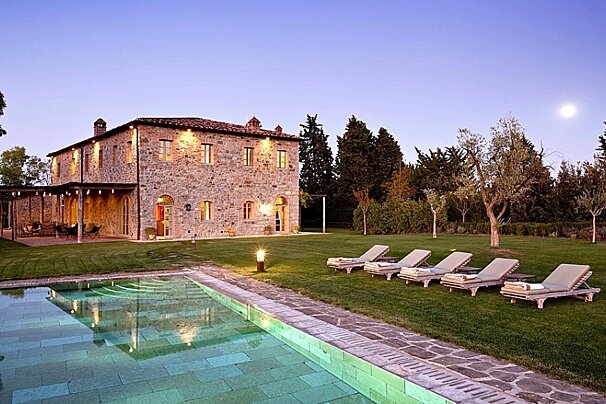
Set the the hotel gardens, the covered outdoor pool is a great spot to relax after a day checking out the region. Alternatively, you can kick back on one of the sun loungers and read a book in the sun for the day.
Set in a dining room with stone walls and open fire place, cuisine local to or grown on the farm is moulded into a meal that is typical of the region. A balanced menu uses traditional recipes that their mothers and grandmothers have passed down, but given a contemporary touch. Open 7 days a week to those staying in the hotel or just passing by.
This park recreates life in prehistoric times.
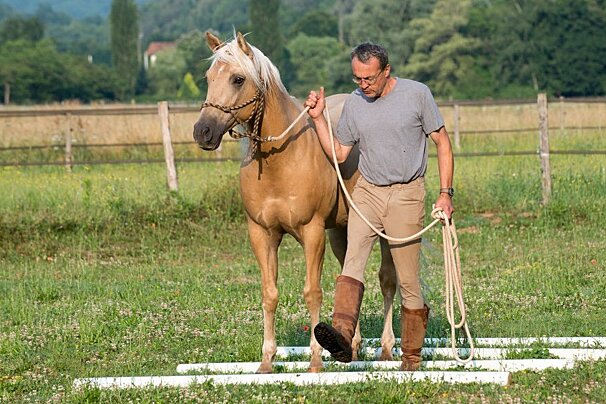
Experience the beautiful Vezere valley and its prehistoric sites on horse back.
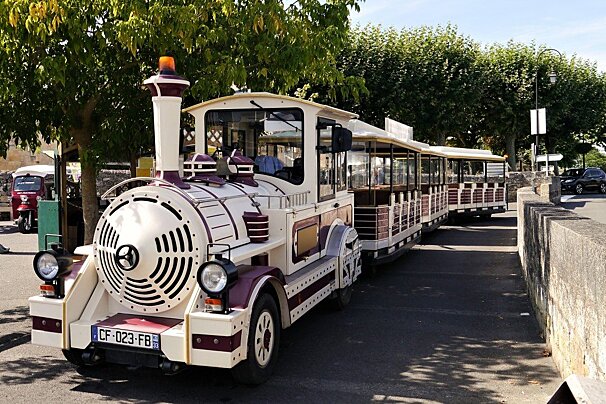
After discovering the city of Saint Emilion this train tour takes you out into the countryside and surrounding vineyards to discover more about the history and culture of wine in this region.

For over 25 years this park has allowed visitors to come into close (and safe!) encounter with crocodiles, cobras and more than 200 other reptiles and venomous species.
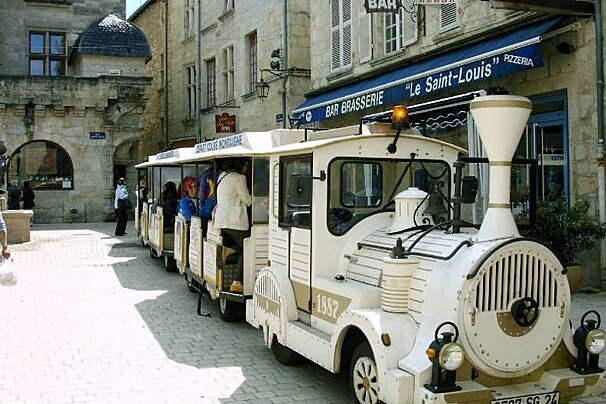
Discover the art and history of the city of Perigueux, exploring the ancient city, old town and admiring the beauty.
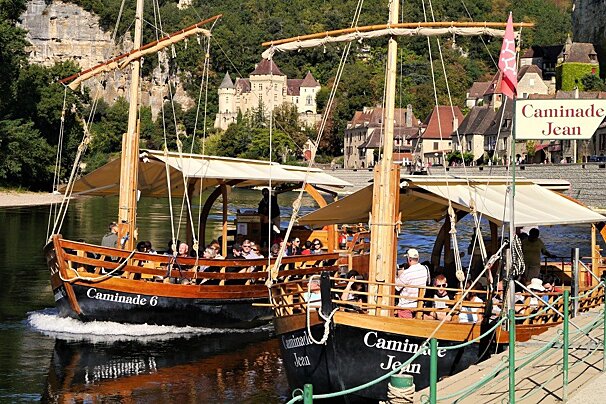
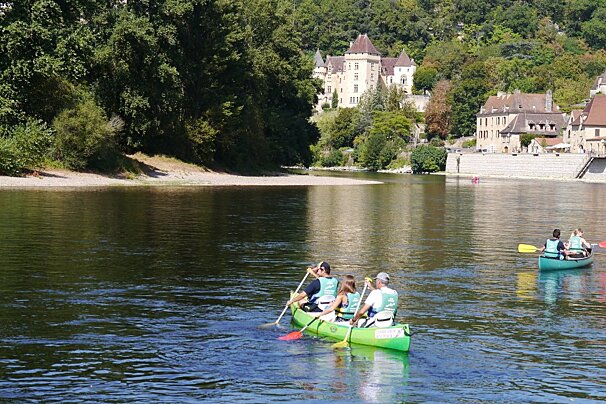
Travel along the valley of the five chateaux on traditional barges and discover some of the most beautiful sites.

This elegant and sophisticated two Michelin star restaurant offers creative dishes designed by chef Cédric Béchade, who plays with colours and textures in his cuisine.

The dining rooms allow for views of the surrounding vineyards and rolling hills. Drinks can also be enjoyed in the small library or among the chestnut trees.

This restaurant offers various possibilities for dining in the same place: a fine restaurant serving modern French cuisine, a bistro with local and seasonal dishes, and a tea room. There is also a beautiful sunny garden overlooking the vineyards.
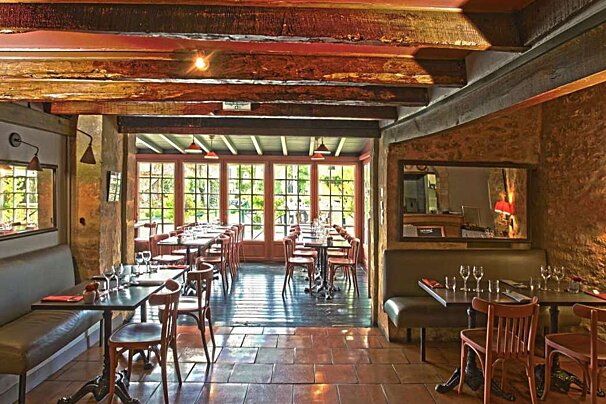
Located 50 yards from the Vieux Logis Hotel, the Bistrot de la Place has exposed wooden beams, simple yet effective place settings and makes you feel immediately comfortable in the fuss free, cosy setting in the centre of Trèmolat.

Perched on a cliff, the Hôtel l'Esplanade has a great setting with good rooms and more importantly, a fantastic restaurant.
This traditional farm serves good quality Périgord dishes using locally-sourced ingredients from its own farm and those nearby. It also has a lovely gîte which sleeps up to five people.
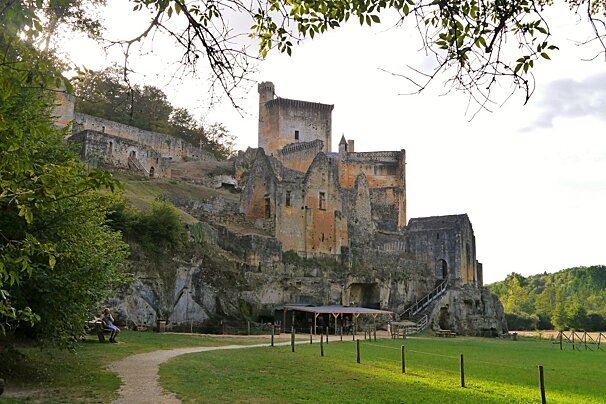
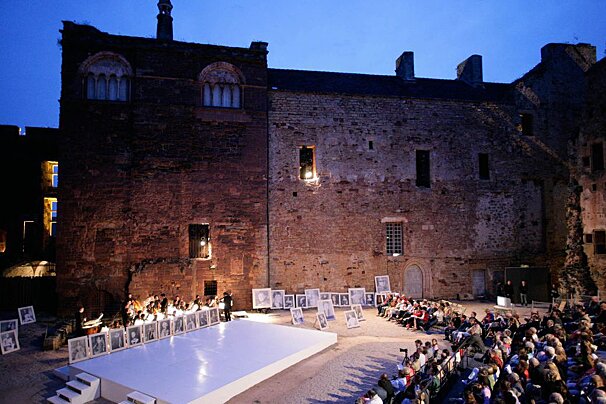
It is thought that the keep at Commarque was originally founded by two abbots in the 12th century. Its ruins, built into the cliff face, have undergone some extensive restoration work over the last 50 years.
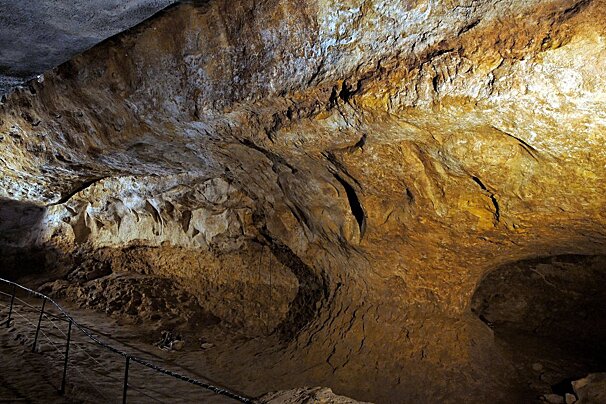
This rock shelter houses outstanding prehistoric animal sculptures, the most significant being eight figures carved into the rock, which are thought to have been there for over 15,000 years.
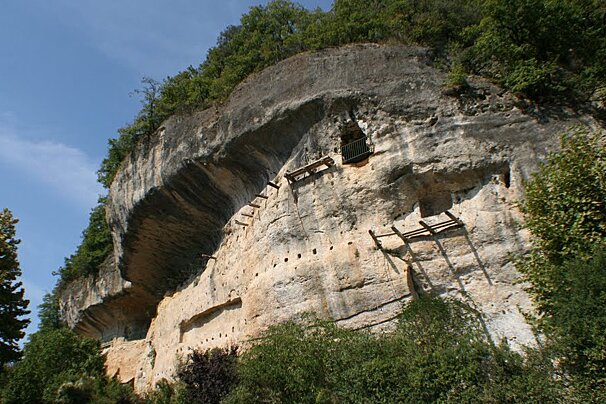
The walk through this park will take you past rock shelters, caves and dwellings where a great number of tools and weapons, dating back over 12,000, have been discovered.
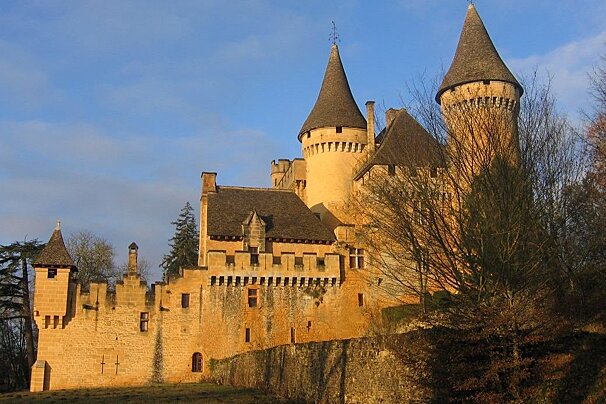
Situated between Sarlat and Les Eyzies-de-Tayac-Sireuil this thirteenth-century castle was renovated as recently as 1890.

This cave houses an impressive collection of prehistoric paintings and engravings dating from the Magdalenian period. Through its winding passageways, there are over 600 engravings of animals and stylised humans.
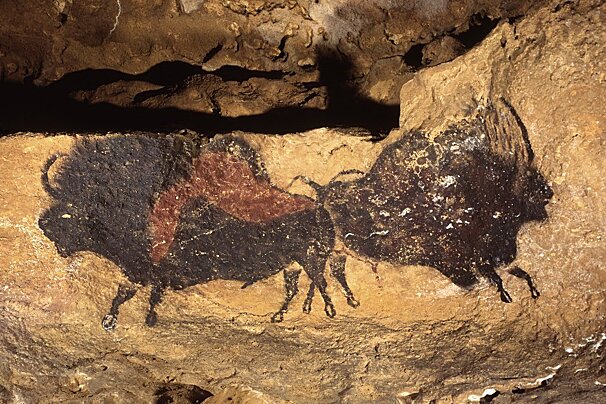
The prehistoric paintings in the Font-de-Gaume caves near Les Eyzies-de-Tayac were discovered at the turn of the 20th century by Denis Peyrony.

The town and the surrounding prehistoric sites have been designated a UNESCO World Heritage site. Nearly 150 sites have already been discovered and contain significant finds dating back as far as the Middle Stone Age - about 300,000 to 40,000 years ago.
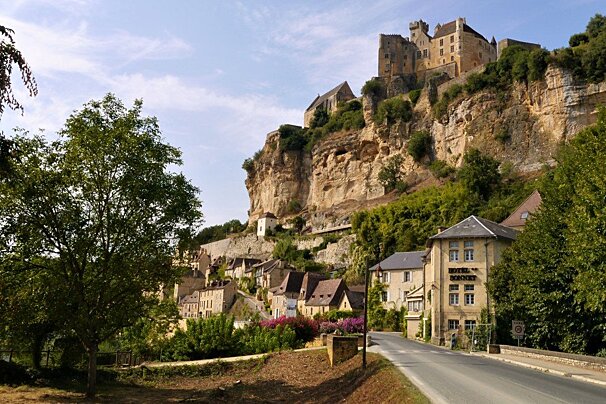
The village of Beynac-et-Cazenac is thought to date back to the 12th century when its imposing cliff top château was constructed.
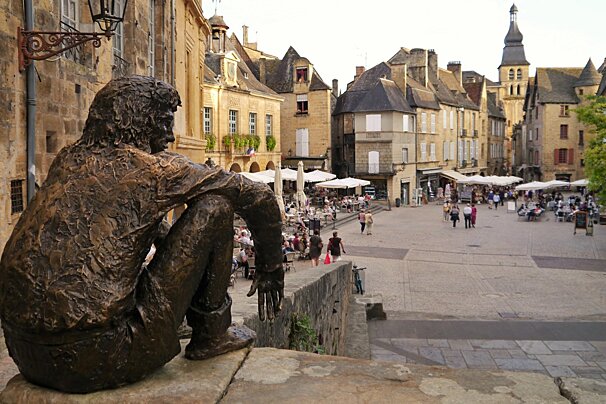
Standing out as one of the most charming towns in the region, this medieval dwelling remains much as it was when it was built in the 14th century.
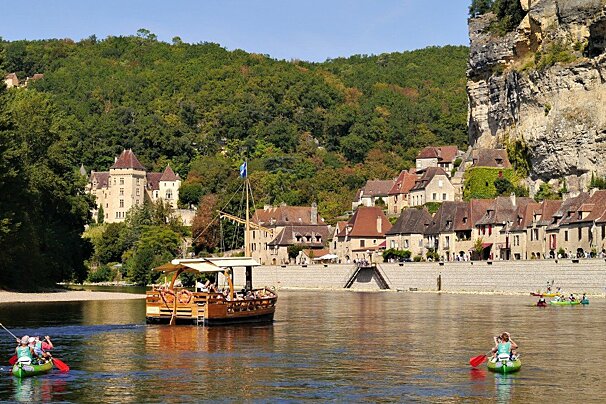
It's hard to imagine a nicer village than La Roque-Gageac, with its huge limestone cliffs that tower behind the Renaissance-style houses built in creamy stone with burnt red roofs.
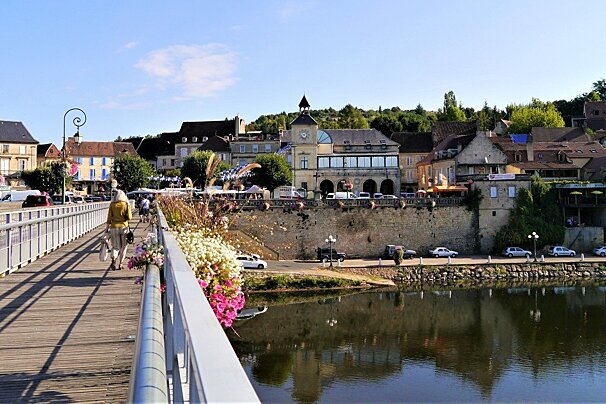
The relaxed town of Le Bugue sits on the river Vézère where it's joined by the Doux. A more tranquil base for exploring the region, it has some pretty, narrow streets and a bustling market twice a week.
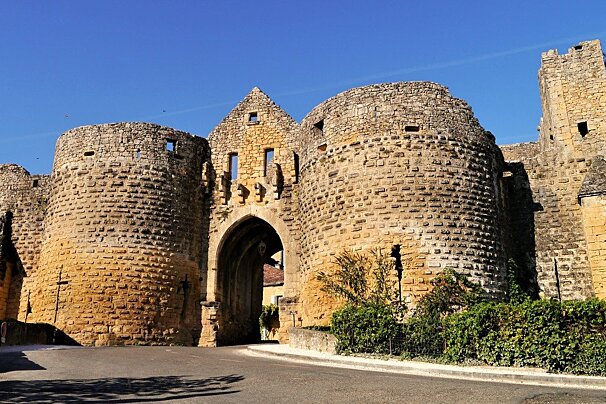
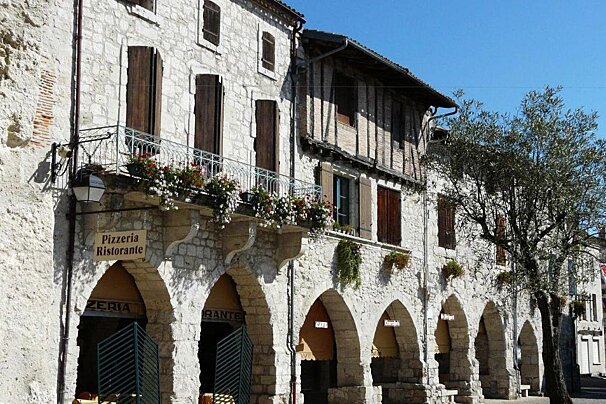
This bastide town, sitting high above the Dordogne river, has an impressive number of its 13th century fortifications still intact, including three of its original gates.